
Beginner Completes: What Makes a Good First Fingerboard Setup
Help new buyers understand what parts are included and what specs and photos matter when evaluating a complete fingerboard listing.
Buy on Kingpin Market
Top stories
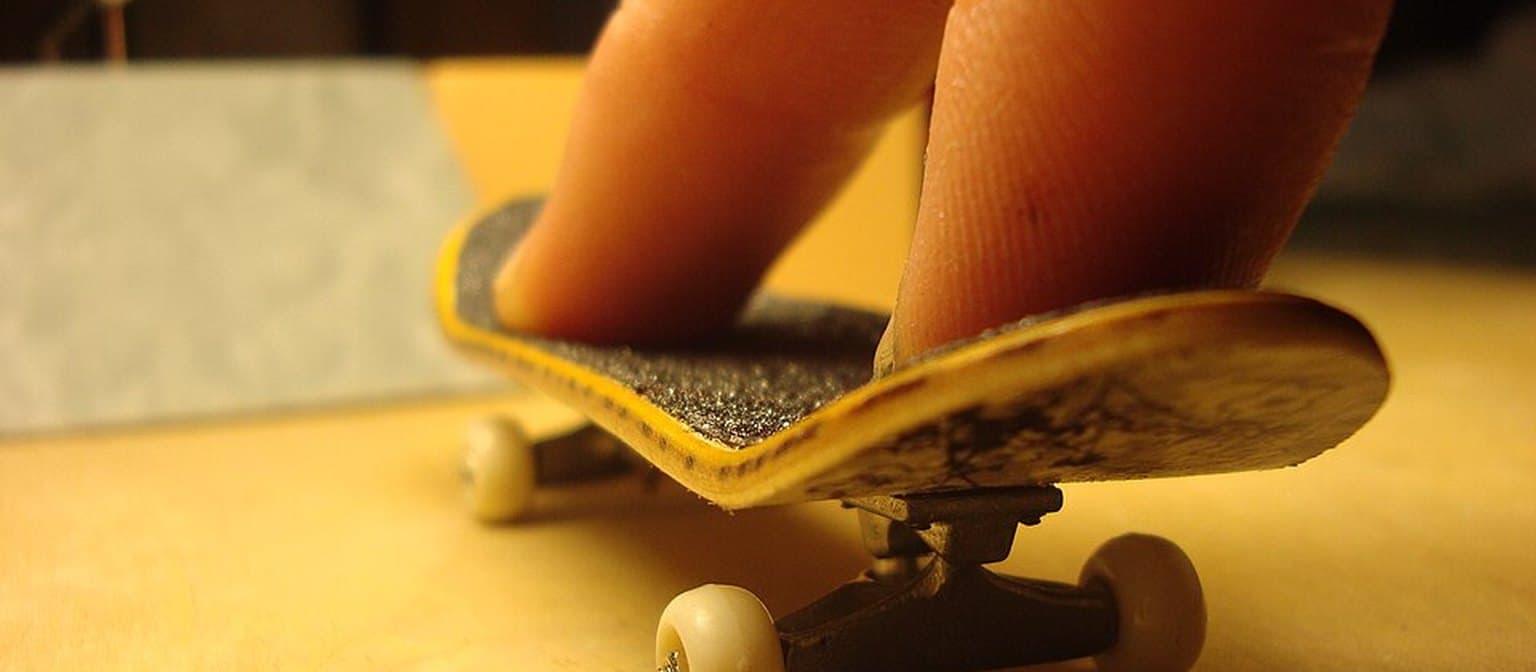
Help new buyers understand what parts are included and what specs and photos matter when evaluating a complete fingerboard listing.
What a complete fingerboard setup includes
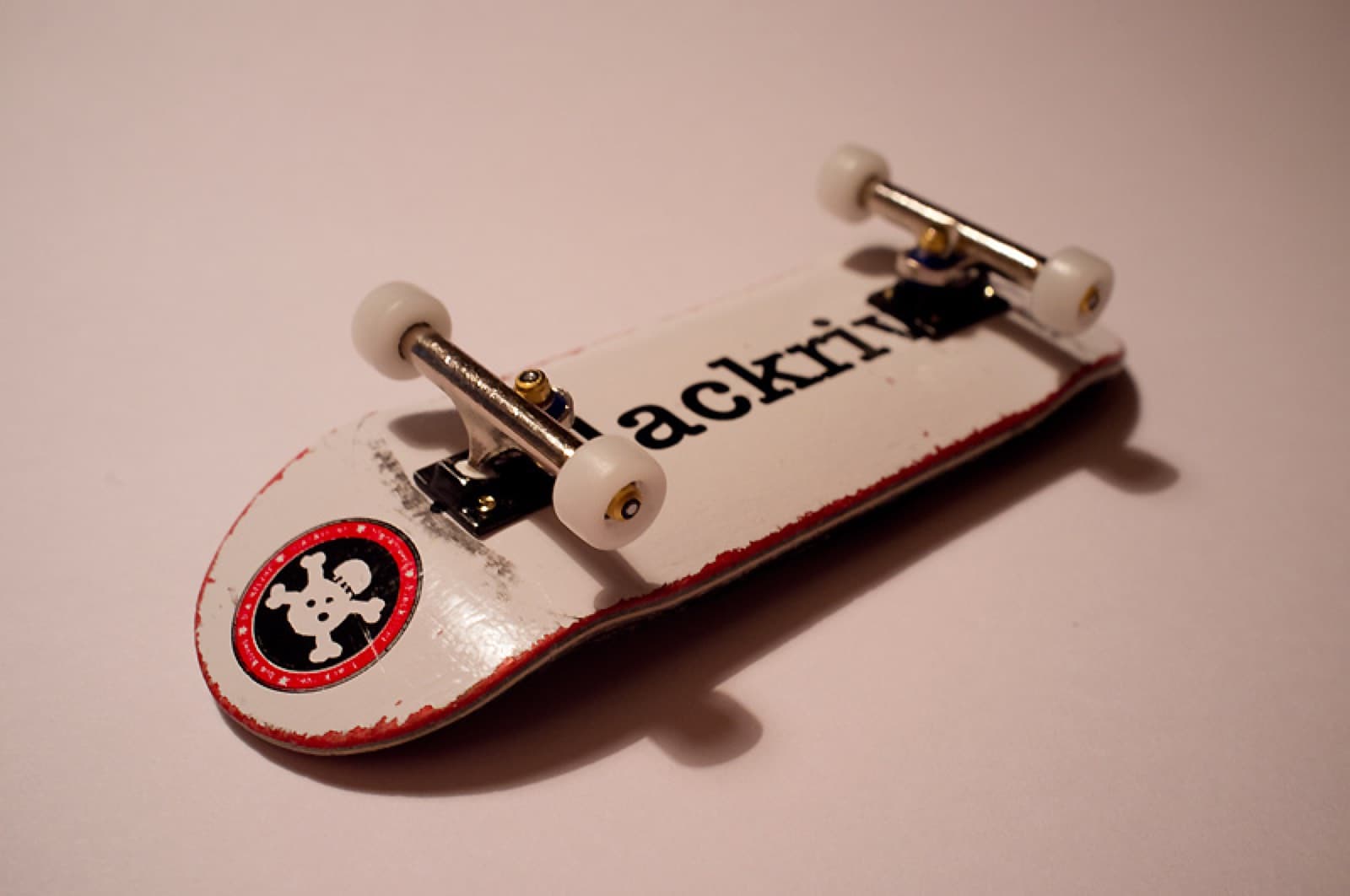
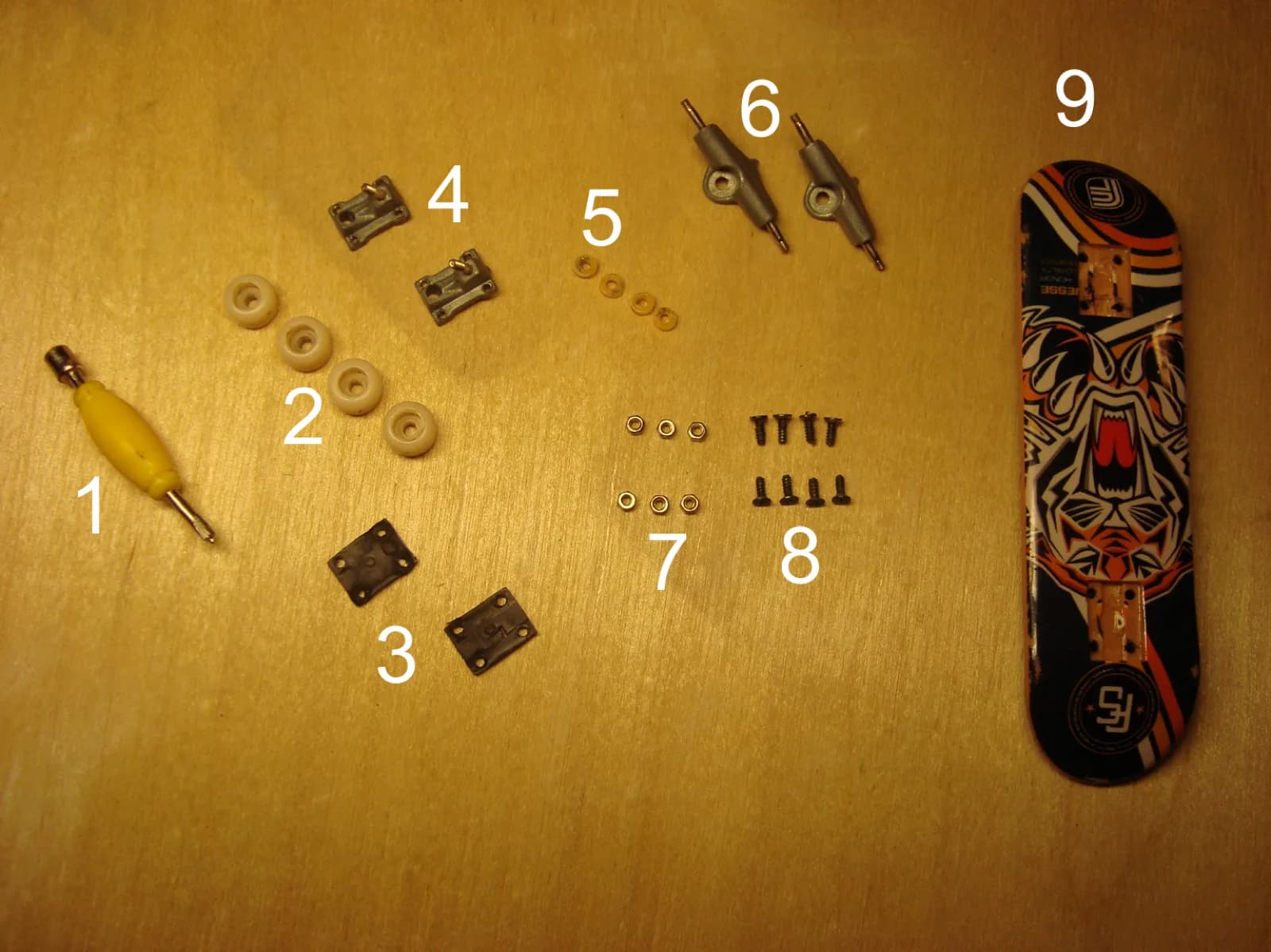
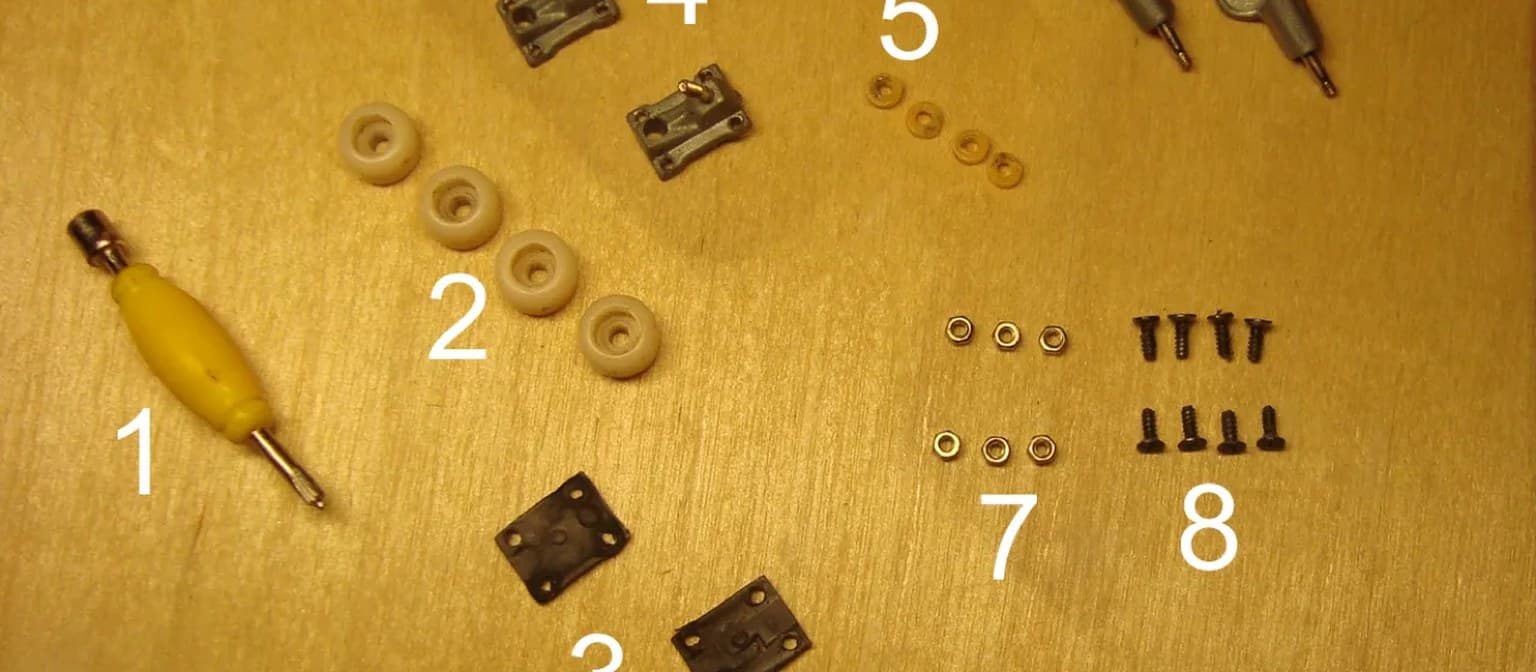
A complete fingerboard setup combines a deck, trucks, wheels, grip tape, bushings, and mounting hardware into a ready-to-ride package. Some completes also include pivot cups, spare hardware, a small tool, and a carrying case, though included accessories vary by brand and price tier. Understanding each component helps buyers compare listings accurately rather than relying on brand names alone.1, 2, 3
- Deck
the wooden or plastic board with mounting holes
- Trucks
two metal axle assemblies that mount to the deck underside
- Wheels
four wheels, with or without bearings depending on the setup tier
- Grip tape
adhesive surface tape applied to the deck top
- Bushings
soft tuning rings inside each truck that control turning resistance
- Pivot cups
small cups at the base of each truck hanger that affect pivot feel
- Mounting hardware
screws, lock nuts, and often a small assembly tool
For buyers
For sellers
Toy completes vs. entry-level pro completes
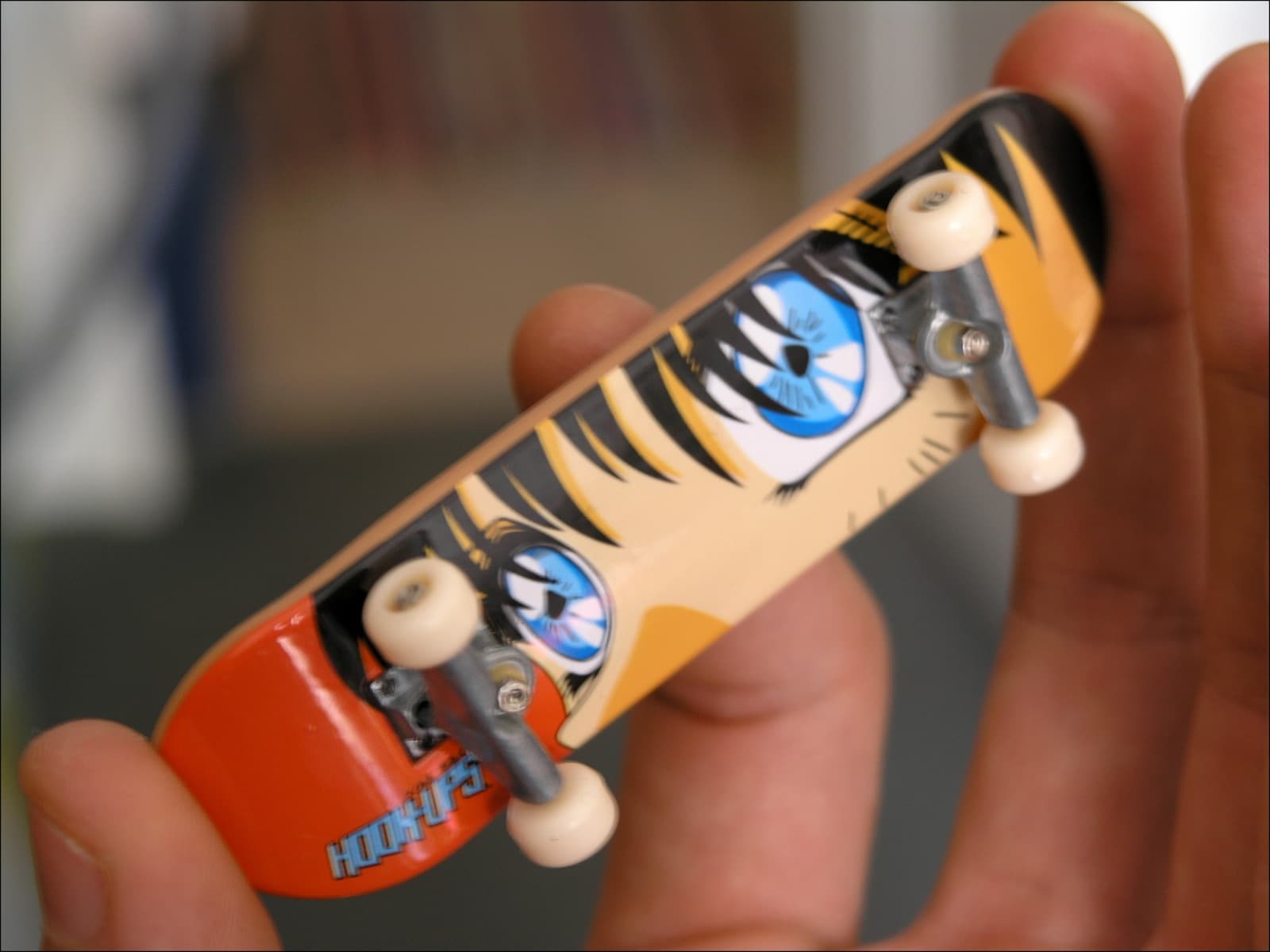
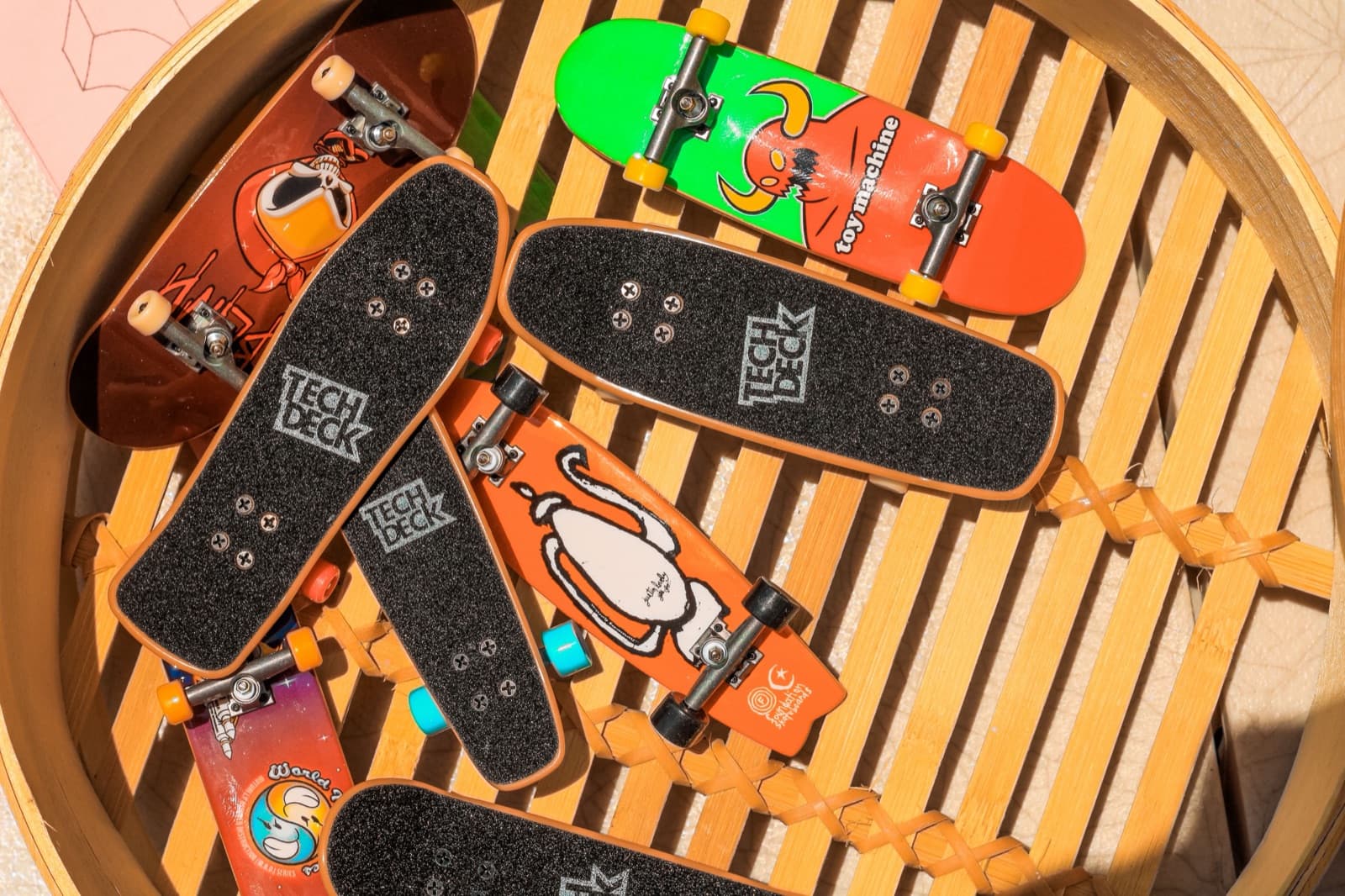
Mass-market toy fingerboards, sometimes called toy completes, typically use molded plastic decks, plastic axle assemblies, and plastic wheels without bearings. The most widely sold example is Tech Deck (made by Spin Master), a 1:12-scale plastic board roughly 96mm long sold for ages 6 and up; most other toy-grade completes are generic, often unbranded plastic boards sold in multipacks. Entry-level pro completes commonly use wooden decks made from maple veneers, metal trucks, and wheels with bearings, which together provide a different riding feel than plastic. The gap between a toy complete and an entry-level pro complete affects how tricks respond and how long parts hold up under regular use.4, 1, 5, 6
- Toy complete: plastic deck, plastic trucks, plastic wheels, no bearings — e.g. Tech Deck (Spin Master) and generic unbranded plastic multipacks, commonly found in toy stores
- Entry-level pro complete: wooden deck, metal trucks, bearing wheels, foam or skate grip tape — from wooden-deck brands such as Berlinwood (Germany), FlatFace (USA), and Teak Tuning (USA), among others
- Mid-range complete: wooden deck, branded metal trucks, urethane or CNC-bearing wheels, better hardware
- Many buyers start on a Tech Deck and later upgrade to a wooden deck with metal trucks — used marketplace listings often mix toy and pro parts, so confirm each component
For buyers
For sellers
Deck width and what the numbers mean
Fingerboard deck width is measured in millimeters across the widest point of the board and is one of the most commonly cited specs in listings. Common widths documented across pro brands include approximately 29mm (narrow), 32mm (widely considered a standard starting point), 33mm to 33.6mm (an intermediate size offered by some brands), 34mm (commonly used in current pro setups), and 36mm or wider. Length is more consistent than width: pro decks generally run about 96–99mm (Tech Deck is 96mm, Berlinwood 98mm, FlatFace 97–99mm), with no single enforced standard — '100mm' is a common round-number description rather than a documented spec. Width affects how fingers sit on the board and which truck widths are compatible, but does not determine whether a setup is suitable for a given rider — personal feel and finger placement are factors that vary.7, 8, 9, 10, 5, 6, 11
- 29mm
documented by brands including Berlinwood and Teak Tuning; associated with faster flip feel in community discussion
- 32mm
widely documented as a standard starting width by multiple brands
- 33mm / 33.3mm / 33.6mm
a mid-size option; Berlinwood documents 33.3mm, FlatFace 33.6mm, and Five Luck 33.3mm/33.5mm, with exact numbers varying by brand
- 34mm
documented as a currently common pro-setup width
- 36mm and wider
Berlinwood documents 36mm; Caramel documents wider decks at 38mm and 40mm
- 35mm is not a separate standard category
boards labeled 35mm fall within the wider 34–36mm range and vary by brand
- Length is not a useful comparison spec
most pro decks are about 96–99mm; there is no official 100mm standard
For buyers
For sellers
Trucks: width, matching, and what to check
Fingerboard trucks are sized primarily by axle width in millimeters, and the commonly recommended practice is to match truck width to deck width. Mismatched widths — where trucks are substantially wider or narrower than the deck — are generally noted by community guides as affecting setup stability and appearance. Truck listings should identify width, hanger and baseplate condition, included hardware (screws, lock nuts, pivot cups, bushings), and whether any parts are missing.12, 13, 1
- Truck width should be close to deck width — exact matching depends on brand and personal preference
- Hanger: the T-shaped metal piece the axle runs through
- Baseplate: the flat plate that mounts to the deck underside
- Pivot cups: small cups at the hanger-baseplate joint that affect turning feel
- Bushings: soft tuning rings that control turning resistance — tighter is more stable, looser turns more freely
- Hardware: screws, lock nuts (nylon-insert or standard), sometimes a small tool
For buyers
For sellers
Wheels and bearings: material and fit
Fingerboard wheels are available in plastic (without bearings), plastic or CNC aluminum with bearings (sometimes called bearing wheels or CNC wheels), and urethane. Plastic wheels without bearings are common in toy-tier and some entry-level completes. Urethane wheels are commonly used in mid-range and pro setups and are associated with a different feel and grip on surfaces, though the degree of difference depends on the specific wheel. Bearings are small steel rings inside the wheel hub that allow the wheel to spin on the truck axle; bearing quality and fit affect spin smoothness.14, 1, 3
- Plastic (no bearing): hard, low cost, common in toy completes
- CNC bearing wheels: machined plastic or metal wheels with press-fit bearings — common in entry to mid-range pro completes
- Urethane: softer material, associated with surface grip and vibration absorption — common in mid to pro setups
- Bearing condition: check for wobble, noise, flat spots, and whether bearings are seated properly
For buyers
For sellers
Grip tape types
Grip tape is the adhesive surface applied to the deck top to give fingers traction. Two types are commonly referenced in the fingerboard community: foam tape, which has a soft, cushioned feel and is widely used in pro and entry-level pro setups; and flat or skate grip, which has a coarser sandpaper-like texture more similar to full-size skateboard grip. Used completes may have worn, lifted, or re-applied tape, which affects appearance and feel. Some completes arrive with tape pre-installed.15, 16
- Foam tape: soft, cushioned, widely used in pro setups — check for peeling, bubbles, or heavy wear
- Flat/skate grip tape: coarser texture, sandpaper feel — check for wear and edge lifting
- Pre-installed tape on a used complete may have grime, wear, or lifted edges
- Tape can be replaced, but replacement adds cost and requires removal of the old tape
For buyers
For sellers
Checking a used complete listing
A used complete on a marketplace listing should be evaluated component by component rather than as a single unit. Deck condition signals include chips, razor tail (thin or sharp nose and tail ends from wear), delamination (layers separating), and re-drilled mounting holes. Truck condition signals include bent or uneven axles, missing hardware, stripped screws, and worn pivot cups. Wheel condition signals include wobble, flat spots, yellowing, and bearing noise or resistance.1, 3, 2
- Deck: chips, razor tail, delamination, re-drilled holes, warping
- Trucks: axle straightness, missing hardware, stripped screws, worn pivot cups
- Wheels: wobble, flat spots, yellowing, bearing noise or resistance
- Tape: wear, peeling, lifted edges, bubbles
- Hardware: confirm all screws and lock nuts are present
For buyers
For sellers
What to ask a seller when specs are missing
Marketplace listings for completes frequently omit key specs, especially for used setups assembled from multiple sources. Asking specific questions before purchase reduces the chance of receiving a setup with incompatible or missing components. The most useful questions confirm deck width, truck width, wheel material, and which hardware is included.1, 7
- What is the deck width in millimeters?
- What brand and width are the trucks?
- Are the wheels plastic, CNC, or urethane, and do they have bearings?
- Are all screws, lock nuts, and pivot cups present?
- Has any part been swapped from the original complete?
- What is the tape type and condition?
- Are there any known repairs, re-drilled holes, or delamination on the deck?
For buyers
For sellers
How to evaluate a complete listing on a marketplace
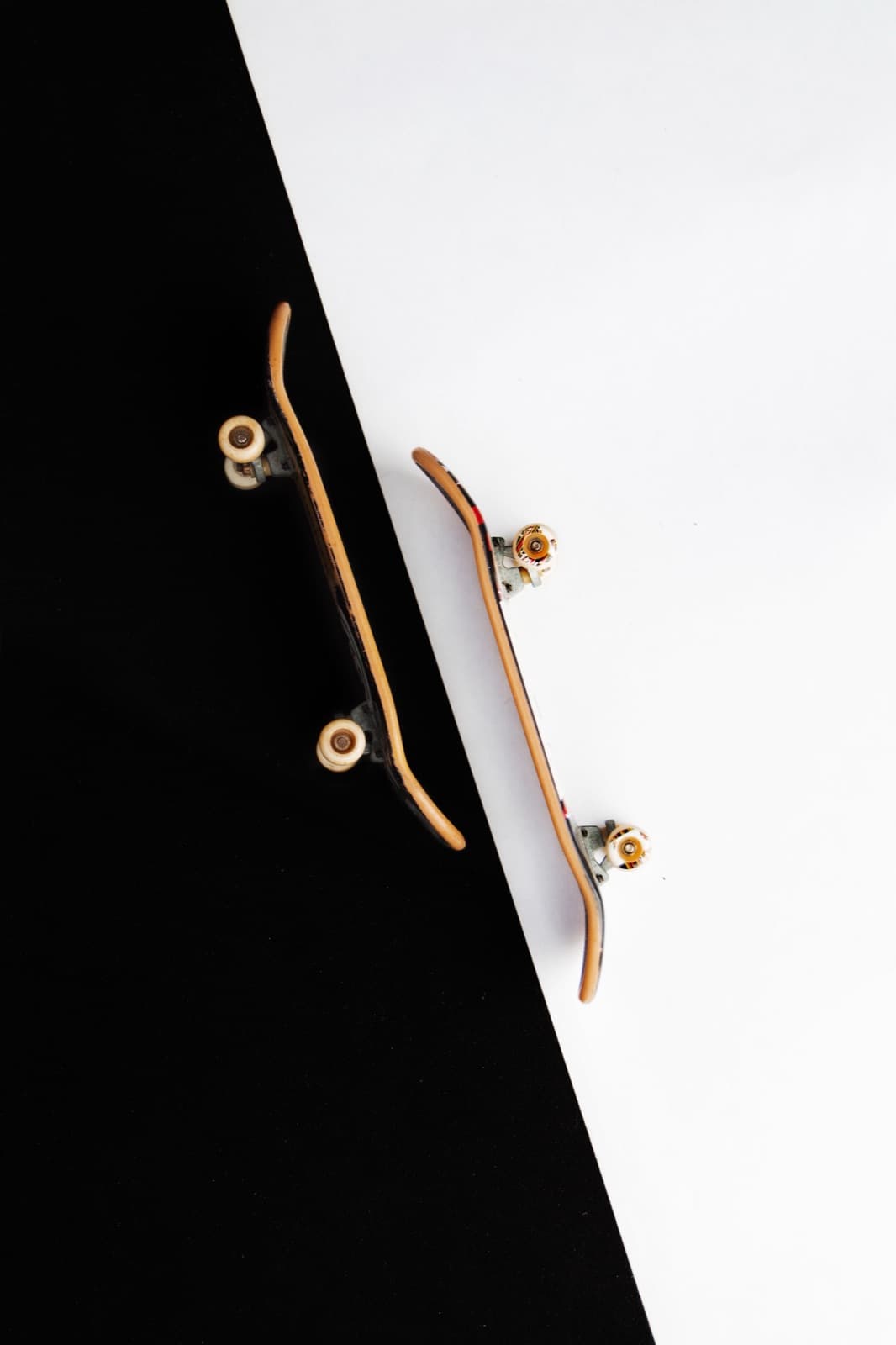
A well-structured complete listing names every component (deck brand and width, truck brand and width, wheel brand and material), states the condition of each, and provides photos from multiple angles. Listings that show only a single styled photo without measurements, component names, or hardware details require buyers to ask follow-up questions before they can assess value or compatibility. When comparing a new complete to a used marketplace listing, the comparison should account for the condition of each part, not just the headline brand.1, 3, 7, 12
- Check for: deck width, truck width, wheel material, tape type, hardware completeness
- Check for: photos of deck underside, trucks, wheels, and hardware
- Red flag: listing names only a deck brand without measurements
- Red flag: single glamour shot with no component detail
- Red flag: 'fully upgraded' claim without naming the specific upgraded parts
- Green flag: caliper or ruler photo confirming deck and truck width
- Green flag: seller notes any worn, swapped, or missing components
For buyers
For sellers
On the Kingpin marketplace
References
Numbered references to the brand, retailer, and community pages that back this article. The label notes how firmly each source is established.
Teak Tuning guide describing what complete setups include across tiers, component lists, and beginner guidance.
Assembly guide covering grip tape, trucks, wheels, and hardware steps with component descriptions.
Retailer guide describing components in a complete fingerboard setup including deck, trucks, wheels, grip.
Comparison of toy-tier (plastic deck, plastic trucks) vs. pro-tier (wooden deck, metal trucks, bearing wheels) completes.
Official Spin Master product page documenting Tech Deck as a 96mm plastic fingerboard (mini skateboard) for ages 6 and up.
FlatFace official deck collection; documents the G16 at 33.6mm width and lengths of ~97–99mm (G15 99mm, G16 97mm).
Berlinwood official catalog on Blackriver Shop; documents 29mm, 32mm, 33.3mm, 36mm widths; low/medium concave; popsicle shape; 5-ply.
Teak Tuning width guide covering 29mm, 32mm, 34mm as documented width options with beginner recommendations.
Covers deck width terminology and what the millimeter measurements refer to.
Community-facing article comparing 29mm, 32mm, and 34mm as documented size categories.
Caramel deck catalog documenting wider decks above 36mm, including 38mm and 40mm named molds.
Documents truck widths 29mm, 32mm, 34mm, 36mm and truck hardware including baseplates, hangers, bushings, pivot cups.
Covers truck width matching to deck width, axle/hanger concepts, and hardware.
Retailer comparison of plastic vs. urethane wheel materials, including durability and feel differences.
Describes foam tape vs. skate grip tape and their differences in feel and use.
Covers foam tape and skate grip tape types, feel differences, and use cases.
Step-by-step assembly guide describing grip tape, trucks, wheels, and hardware in order.
Keep reading
Decks
Deck Widths Explained: How to Choose and Compare Fingerboard Sizes
A reference for buyers comparing deck widths, upgraders, and deck hunters evaluating used listings where specs are often missing.
Wheels
Wheels Explained: Choosing Fingerboard Wheels
Materials, durometer, sizing, bearings, and shapes — what changes how a wheel feels.
Recommended
Deck Widths Explained: How to Choose and Compare Fingerboard Sizes
Decks
Wheels Explained: Choosing Fingerboard Wheels
Wheels
Trucks and Deck Compatibility: A Buyer-Friendly Guide
Trucks
Tuning Your Setup: Bushings, Pivot Cups, Grip, and Hardware
Tuning
Rare Drops and Limited Graphics: How to Read Limited Releases
Buying smart
Recent posts
Deck Widths Explained: How to Choose and Compare Fingerboard Sizes
Decks
Trucks and Deck Compatibility: A Buyer-Friendly Guide
Trucks
Wheels Explained: Choosing Fingerboard Wheels
Wheels
Tuning Your Setup: Bushings, Pivot Cups, Grip, and Hardware
Tuning
Rare Drops and Limited Graphics: How to Read Limited Releases
Buying smart
Used Fingerboard Listings: What Photos and Specs Should Show
Buying smart