
Wheels Explained: Choosing Fingerboard Wheels
Materials, durometer, sizing, bearings, and shapes — what changes how a wheel feels.
Buy on Kingpin Market
Top stories
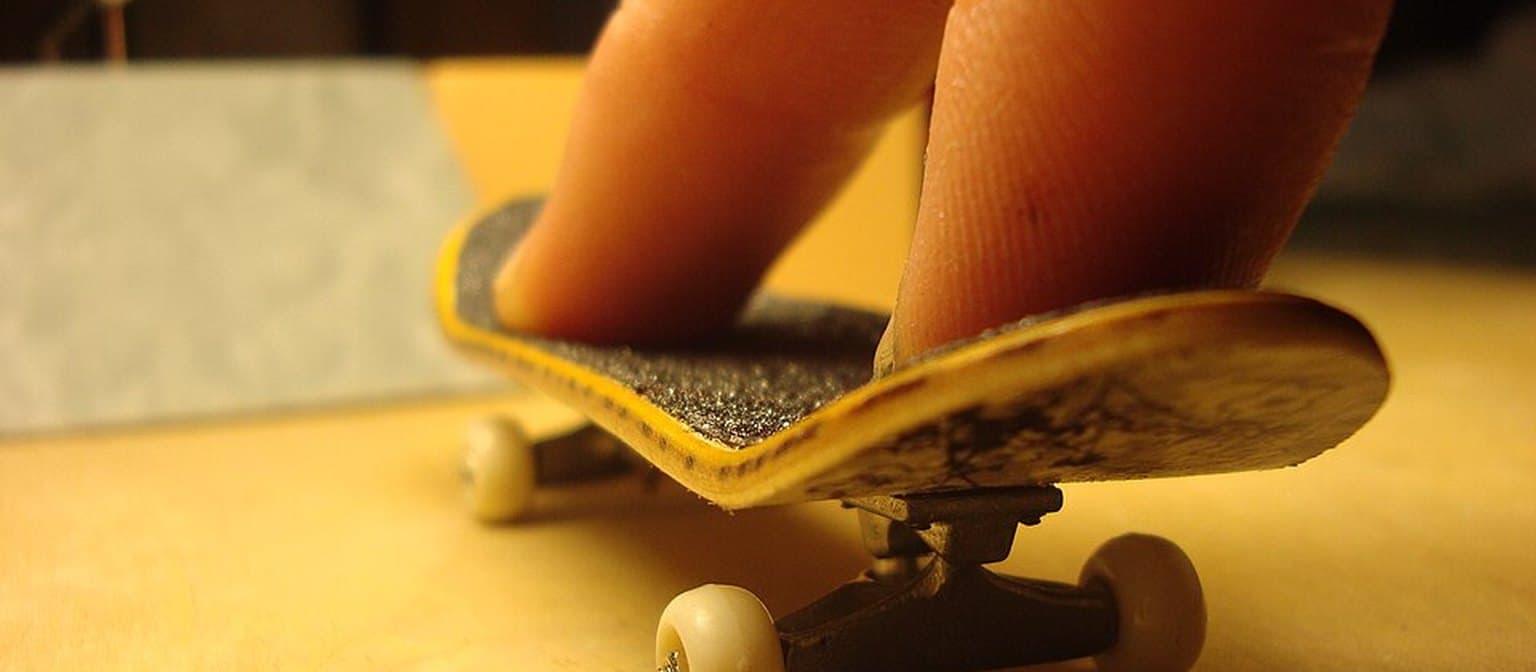
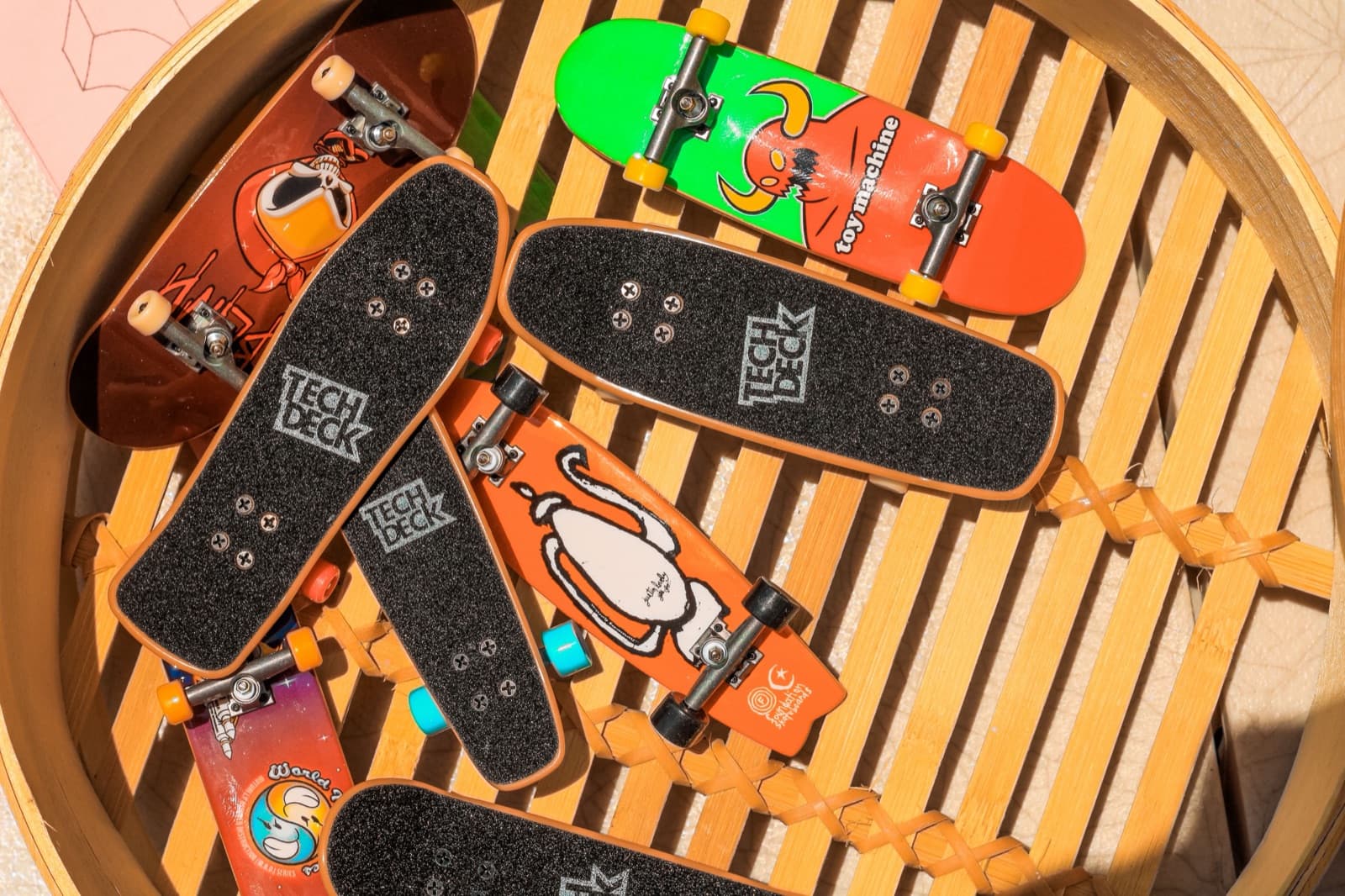
Materials, durometer, sizing, bearings, and shapes — what changes how a wheel feels.
Plastic vs. urethane wheels
Fingerboard wheels are commonly made from either molded/CNC plastic or poured urethane (the same family of material used in real skateboard wheels). The two materials behave differently, and which one suits a setup depends on the rider's goals rather than one being universally superior.1, 2, 3
- Plastic wheels are common on entry-level and starter completes. They are inexpensive and widely available.
- Urethane wheels are softer and more flexible, which gives more grip and a vibration-absorbing roll that many riders describe as closer to a real skateboard feel.
- Durability differs: plastic wheels are more prone to developing flat spots or cracking under heavy use, while urethane tends to stay round longer.
- Some soft urethane wheels produce a 'squeak' during slides, which plastic wheels generally do not.
- Feel is subjective and surface-dependent; a wheel that suits a smooth ramp may feel different on a textured park surface.
For buyers
For sellers
Still being verified
- Specific longevity claims, such as durometer retained after a certain number of hours, are not backed by published wear testing; durability differences are described by brands and sellers.
Durometer (hardness)
Durometer describes a wheel's hardness. Fingerboard urethane wheels are usually rated on the D (Shore D) scale. Documented durometers seen across brands and retailer listings include figures in roughly the 60D–72D range, with specific values such as 60D, 61D, 64D, 65D, 68D, 70D, and 72D appearing on product pages. Importantly, durometer alone does not fully determine feel: brands note that two wheels with the same durometer can feel different because of urethane formula, pigment, and shape.4, 3, 5, 6, 7, 8, 9
- Softer urethane (toward the lower end of the documented range) tends to offer more grip; often associated with ramp/park and transition riding.
- Harder urethane (toward the higher end) tends to slide more easily; often associated with technical street riding.
- Documented examples: Blistered standard wheels are described as a 60D blend, with some models in an exclusive 72D FlatFace urethane formula. FlatFace describes a soft, grippy original 60D and limited harder 72D versions. Dynamic lists 64D 'Butter' wheels. Teak Tuning lists 61D urethane wheels. Maple ULTRA 3.0 is listed at 70D.
- Dual-durometer wheels combine two hardnesses in one wheel (FlatFace offers these), aiming to blend grip and slide characteristics.
- Durometer labels are not always directly comparable across brands because measurement scales and formulas vary.
- Durometer lineups change with limited runs; confirm against the brand's current product page.
- No single durometer is universally best; the right hardness depends on riding style, surface, and personal preference.
For buyers
For sellers
Still being verified
- Durometer labels are not directly comparable across brands unless the maker publishes the measurement scale and method.
Diameter and width
Wheel diameter (height) and width affect both how the setup rolls and whether bearings and wheels clear the deck and trucks. Documented fingerboard wheel diameters span roughly 6mm to about 8.7mm, with common sizes around 7mm–7.5mm. Width figures such as 4.4mm and 5mm appear on product listings.10, 2, 11
- Smaller-diameter wheels (around 6mm–7mm) are often described as lighter and more technical/flip-friendly.
- Larger-diameter wheels (around 7.5mm–8mm+) are often associated with more stability for ramps and bowls.
- Diameter and width affect clearance: a wheel must clear the deck edges and not rub during deep leans or turns.
- Width also relates to bearing fit and how the wheel seats on the axle.
For buyers
For sellers
Still being verified
- Across retailer listings, diameters span roughly 6mm to about 8.7mm and widths around 4.4mm–5mm; there is no single industry-wide wheel-size spec.
Bearings: standards and fit
Most pro fingerboard wheels use small ball bearings pressed into the wheel, which is what gives a smooth, free-rolling spin versus a solid plastic wheel. Listings commonly cite an ABEC rating (e.g., ABEC-7 or ABEC-9). Bearings come in single-bearing and dual-bearing configurations, and this affects truck compatibility.6, 12, 13, 14, 10
- Single-bearing wheels seat one bearing per wheel; dual-bearing wheels seat two bearings per wheel and require a longer truck axle to fit.
- Dual-bearing setups are described as more stable with less wobble, but they only fit dual-bearing-compatible trucks (e.g., Dynamic Dual Bearing Edition, Blackriver Dual Bearing Edition).
- Bearings are press-fit into the wheel. Bearings can be damaged during pressing, and a wheel that has lost its grip on the bearing will slip or wobble on the axle.
- ABEC ratings (ABEC-7, ABEC-9) appear frequently in listings but are a general bearing-precision standard, not a fingerboard-specific guarantee of feel.
- Skate-industry sources describe ABEC ratings as a tolerance standard often used as a marketing label; it does not certify fingerboard-specific quality.
- Brands list cross-compatible single-bearing wheel makers — for example, Dynamic's FAQ names FlatFace, JoyCult, Oak, Winkler, Wysocki, Lab, Cartwheels, Peak, and Rolling Fingers as fitting standard (single-bearing) Dynamic Trucks.
For buyers
For sellers
Still being verified
- One documented fingerboard bearing size is 1.5mm x 4mm x 2mm, but there is no confirmed industry-wide bearing standard.
- No brand or standards body publishes cross-brand press-fit tolerance specs for fingerboard wheels.
Wheel shape profiles
The shape of a wheel's contact face changes how it grips and slides. Brands use a range of named profiles. The terms below are documented across brand and retailer pages, though naming is not standardized across the whole market.15, 16, 17, 14, 10
- Flat-face / street profile: a flat contact face, associated with a classic street-wheel feel and technical riding.
- Conical: a tapered face. Dynamic sells a 'Conical Cruiser' line; conical shapes are often described as offering a wider contact patch for grip and stability.
- Rounded / standard: rounded edges for versatile all-around use.
- Bowl / slim bowl: wider or taller profiles associated with transition and bowl riding. JoyCult sizes its line to scale-equivalents of real skate wheels (Lite ≈ 50mm, Classic ≈ 54mm, XL ≈ 58mm).
- Shape naming differs by brand (e.g., Igloo's 'R1' bowl-style vs. 'R2' flat-faced), so the same word can mean slightly different profiles between makers.
For buyers
For sellers
Still being verified
- Shape names are brand-specific (for example, Igloo R1/R2 vs. Dynamic Conical Cruiser); there is no standardized cross-brand mapping.
- How much each shape objectively changes feel is largely described in subjective brand/community terms rather than measured data.
Notable wheel brands and documented specs
Several wheel brands publish specs on official or retailer pages. The notes below reflect documented facts; buyers should verify current models directly, as lineups change and limited runs come and go.3, 18, 4, 19, 20, 7, 14, 5, 12
- FlatFace (Massachusetts, est. 2003): long-running US brand with multiple wheel generations; offers soft 60D and limited harder 72D urethane, plus dual-durometer bearing wheels.
- Blistered (USA, est. 2022): hand-poured urethane wheels; standard 60D blend with some 72D FlatFace-urethane models; collaboration shapes with FlatFace and Blackriver. In 2025, Blistered states it was sold to / partnered with Mike Schneider of FlatFace.
- Blackriver (Germany, est. 1999): distributes and collaborates on urethane wheels (e.g., Blackriver x FlatFace x Blistered) and lists Maple Pro wheels including a 70D ULTRA option.
- JoyCult (handmade in Brantford, Ontario, Canada by Matt Watkinson): premium urethane with bearings locked into the wheel; line scaled to real skate-wheel equivalents (Lite ≈ 50mm, Classic ≈ 54mm, XL ≈ 58mm); offers dual-durometer options.
- Dynamic (Southern California): sells its own wheels (e.g., Conical Cruiser, 64D 'Butter') designed around its single- and dual-bearing trucks.
- Other documented single-bearing brands named by Dynamic include Oak, Winkler, Wysocki, Lab, Cartwheels, Peak, and Rolling Fingers.
For buyers
For sellers
What to check in a used wheel listing
Used wheels can be a good value, but specific wear modes affect roll quality and bearing fit. These checks are documented across buying guides.10, 2, 21
- Flat spots: look for a flattened section that causes a stutter or bump in the roll. Ask for a spin/wobble video for higher-value sets.
- Bearing fit: a wheel that has lost its grip on its bearing will wobble or slip on the axle. Ask whether bearings still seat tightly.
- Bearing smoothness: gritty, stiff, or noisy bearings indicate wear or contamination.
- Color fading / yellowing: clear and lighter urethane can yellow or fade over time. This is cosmetic but worth disclosing.
- Cracks or pitting: surface cracking or pitting indicates heavy wear or lower-quality urethane.
- Set consistency: confirm all four wheels match in diameter, shape, and color, and none has been swapped.
For buyers
For sellers
What sellers should include in a wheel listing
A complete wheel listing lets a buyer evaluate fit and condition without guessing. Combine confirmed specs with honest condition notes.11, 6, 4, 10
- Brand and exact model/generation/shape name.
- Material (plastic / urethane / CNC).
- Durometer, only if confirmed from packaging or the brand page (otherwise state 'unknown').
- Diameter and width if measurable.
- Bearing type (single vs. dual) and bearing condition.
- Color/colorway and whether the wheels are faded or yellowed.
- Condition notes: flat spots, cracks, bearing slip, set consistency.
- Whether original packaging is included (packaging claims should be backed by photos, not memory).
For buyers
For sellers
On the Kingpin marketplace
References
Numbered references to the brand, retailer, and community pages that back this article. The label notes how firmly each source is established.
Retailer/community comparison of urethane vs plastic feel, grip, durability, and sound. Used for material framing; promotional tone, so treated as community confidence.
Community/retailer guide covering materials, sizes, and wheel categories (street, cruiser, bowl, slim bowl).
Describes soft grippy original 60D urethane and limited harder 72D versions; notes each color/material has its own feel and hardness.
Standard wheels are a 60D blend; some models in exclusive 72D FlatFace urethane. Hand-poured genuine urethane. Notes durometer alone does not determine feel.
Documents a 64D Dynamic wheel.
Documents a 61D urethane Slim Bowl wheel with ABEC-9 bearings; example of bowl-profile and durometer/bearing labeling in listings.
Maple wheels (est. 2018, Quebec, Canada); ULTRA 3.0 listed at 70D. Retailer-hosted brand listing.
Dual durometer wheels combine two materials of differing hardness in one wheel.
Community/brand blog comparing softer vs harder durometer feel. Used for durometer feel framing, not absolute claims.
Community/retailer guide covering wheel sizes (6mm–8mm), shapes, and used-wheel inspection points.
Retailer listing documenting a 68D / 7.5mm diameter / ABEC-9 wheel; example of diameter+durometer+bearing labeling. Treat as third-party listing, not a brand source.
Lists single-bearing wheel brands compatible with standard Dynamic Trucks (FlatFace, JoyCult, Oak, Winkler, Wysocki, Lab, Cartwheels, Peak, Rolling Fingers) and explains dual-bearing wheels need the Dual Bearing Edition (longer axle).
Dual Bearing Edition trucks designed for dual-bearing wheels; relevant to wheel-truck bearing compatibility.
JoyCult urethane wheels with bearings locked into the wheel; line scaled to full-scale skate-wheel equivalents (Lite ≈ 50mm, Classic ≈ 54mm, XL ≈ 58mm). Maker/location (Brantford, Ontario) corroborated by interview and retailer descriptions.
Brand blog defining R1 (bowl-style, conical front face) vs R2 (flat-faced) shapes; illustrates that shape naming is brand-specific.
Documents the Conical Cruiser shape line at 64D.
Brand shape guide describing standard, conical, and slim shape categories and their general feel trade-offs.
FlatFace started in 2003 with grip tape, moved into decks, then bearing wheels.
Blistered opened June 8, 2022; in 2025 Blistered states it was sold to / partnered with Mike Schneider from FlatFace.
Documents a three-way collaboration urethane wheel sold through Blackriver.
General buying guide covering wear signs (flat spots, bearing slip, cracking). Low-authority aggregator source; corroborated by other guides before use.
Keep reading
Recommended
Tuning Your Setup: Bushings, Pivot Cups, Grip, and Hardware
Tuning
Trucks and Deck Compatibility: A Buyer-Friendly Guide
Trucks
Beginner Completes: What Makes a Good First Fingerboard Setup
Setup basics
Deck Widths Explained: How to Choose and Compare Fingerboard Sizes
Decks
Rare Drops and Limited Graphics: How to Read Limited Releases
Buying smart
Recent posts
Beginner Completes: What Makes a Good First Fingerboard Setup
Setup basics
Deck Widths Explained: How to Choose and Compare Fingerboard Sizes
Decks
Trucks and Deck Compatibility: A Buyer-Friendly Guide
Trucks
Tuning Your Setup: Bushings, Pivot Cups, Grip, and Hardware
Tuning
Rare Drops and Limited Graphics: How to Read Limited Releases
Buying smart
Used Fingerboard Listings: What Photos and Specs Should Show
Buying smart