
Tuning Your Setup: Bushings, Pivot Cups, Grip, and Hardware
A practical guide to tuning fingerboard feel with bushings, pivot cups, grip, and small hardware.
Buy on Kingpin Market
Top stories
A practical guide to tuning fingerboard feel with bushings, pivot cups, grip, and small hardware.
Bushing hardness and pivot response
Bushings are the urethane, rubber, or silicone rings that sit around the kingpin and control how the truck turns. Hardness is measured on the A-scale (durometer): lower numbers compress more easily and allow more lean and turn; higher numbers resist compression and increase stability. Teak Tuning's documented Pro Duro Bubble Bushing range uses a proprietary silicone blend in 51A (extra loose / maximum truck movement), 61A (loose / very responsive), and 71A (medium / crisper movement with moderate range). FlatFace offers Blistered-branded bushings described as having high rebound and responsiveness, as well as Mike Schneider Pro Bushings with a distinct material and two top bushing hardness options.1, 2, 3, 4
- Lower durometer (softer) = more lean and turn, looser feel.
- Higher durometer (harder) = less lean, more stability and return.
- Teak Tuning documents 51A, 61A, and 71A as their three released durometer tiers.
- FlatFace carries Blistered bushings and Mike Schneider Pro Bushings as upgrade options.
- Blackriver documents replacement-bushing hardness by named tier and color rather than a published numeric durometer.
- Dynamic sells spare bushings with pivot cups, documented as medium hardness with no published numeric durometer.
- Worn or flattened bushings can make a truck feel looser than its rated durometer suggests; inspect before attributing handling changes to bushing hardness alone.
- Most fingerboard trucks use a pair of bushings (top and bottom); some advanced tuning uses different hardnesses for top and bottom.
For buyers
For sellers
Pivot cups and what they do
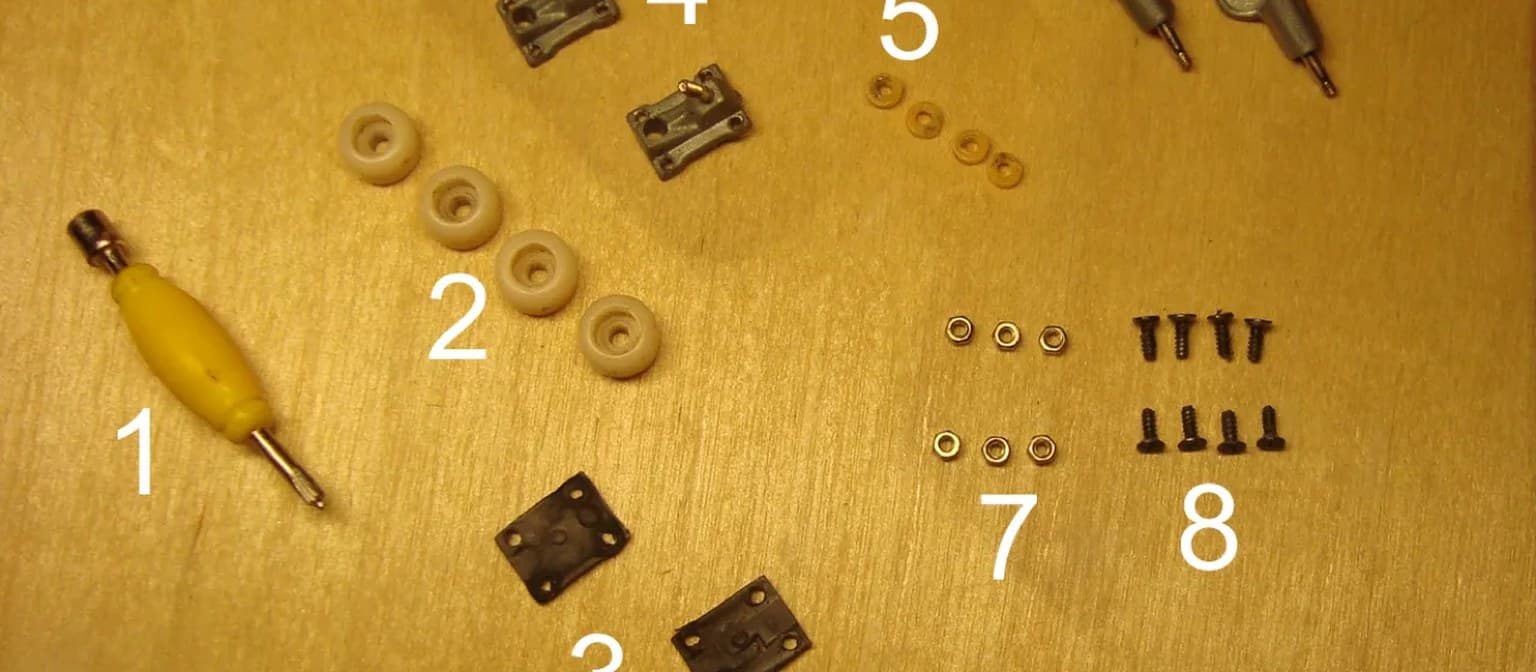
The pivot cup is a small cup that sits inside the baseplate and holds the truck hanger pivot in place. It allows the hanger to rock side to side as the truck turns. Worn or degraded pivot cups can make the truck feel sloppy or unpredictable independent of bushing hardness. Replacement pivot cups are available from several brands. Blackriver sells pivot cups documented in five hardness variants, each identified by color: hard red, medium black, classic white, classic orange, soft blue, and super soft white. FlatFace sells Basic Pivot Cups (packs of two, random color) and V2 Pivot Cups designed specifically for Blistered trucks. Piro and SouthSoft produce urethane pivot cups marketed for specific truck fits, including Blackriver and some Dynamic-compatible SKUs.5, 6, 3, 7, 8, 9
- Blackriver documents five hardness options for their replacement pivot cups, color-coded for quick identification.
- FlatFace V2 Pivot Cups are specifically designed for Blistered trucks; Basic Pivot Cups fit a wider range.
- SouthSoft Pro Pivot Cups document Blackriver fit, and some SKUs also document Dynamic compatibility for standard-kingpin trucks.
- Piro pivot cups are sold as urethane and compatible with Blackriver trucks.
- Blackriver super-soft pivot cups are documented by retailers as a two-piece set rather than individually sold cups.
- Upgrading pivot cups is often a low-cost first tuning step before changing bushings.
- A worn pivot cup can make an otherwise-stiff truck feel unexpectedly loose.
For buyers
For sellers
Still being verified
- Piro pivot cups are described as urethane in retailer listings, but no exact Shore hardness or material spec is published.
- SouthSoft documents Blackriver fit and some Dynamic-compatible SKUs, but no full official compatibility list is published.
Grip tape: materials, feel, and application
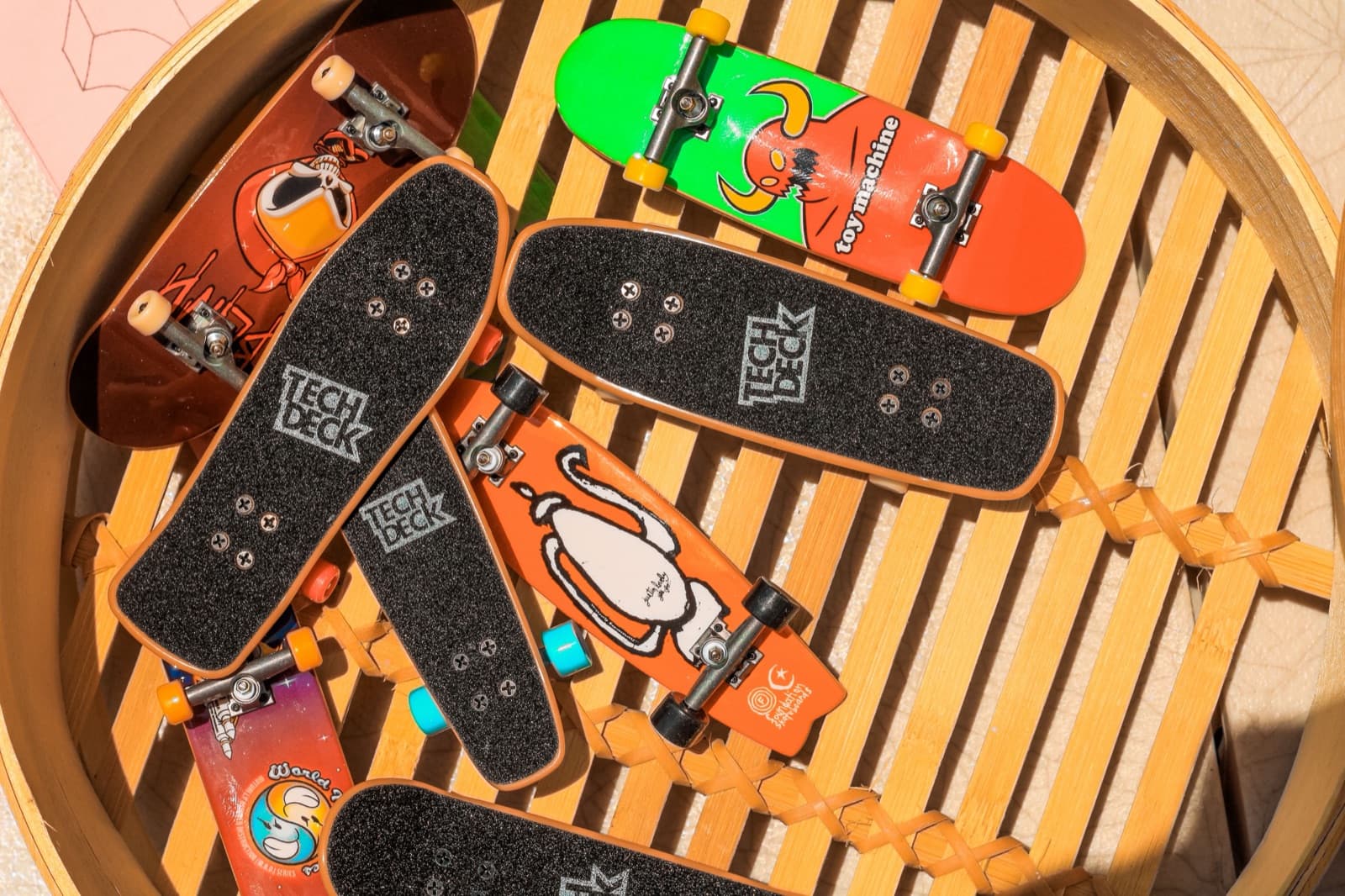
Grip tape keeps fingers connected to the deck and affects how tricks are initiated, caught, and controlled. The two main types are foam grip tape and sandpaper (grit) grip tape. Foam tape is described by Teak Tuning as the most common type in fingerboarding; it is soft on fingers while still providing grip. Teak offers foam tape in documented thicknesses from 0.5mm ultra-thin to 1mm standard, with pre-cut options sized for common deck widths. Sandpaper grip tape provides a textured, gritty surface; it can be harder on fingers during long sessions and tends to wear down faster, but is preferred by some riders for dark slides and specific tricks. Caramel Fingerboards documents that grit level can be varied on sandpaper tape, allowing riders to customize grip intensity. FlatFace curates third-party tape brands and does not produce a house foam tape. Blackriver sells branded Riptape with documented textures and dimensions.10, 11, 12, 13, 3
- Foam tape is the most documented and widely used type in the pro fingerboard community.
- Teak Tuning documents 0.5mm and 1mm foam tape options; thinner tape lets you feel the deck shape more directly.
- Sandpaper grip is preferred by some riders for dark slides and offers a more abrasive surface.
- Blackriver Riptape is documented in Classic and Slim & Catchy textures, with pre-cut and uncut dimensions.
- Pre-cut tape is sized for specific deck widths; universal sheets require trimming.
- Tape is applied adhesive-side down; a mini file or straight edge is used to trim edges flush.
- Used tape on a deck being sold should be disclosed; buyers may prefer fresh tape.
For buyers
For sellers
Still being verified
- Teak Tuning describes sandpaper tape as gritty but does not publish exact grit numbers.
Hardware: kingpin tightness and screw length
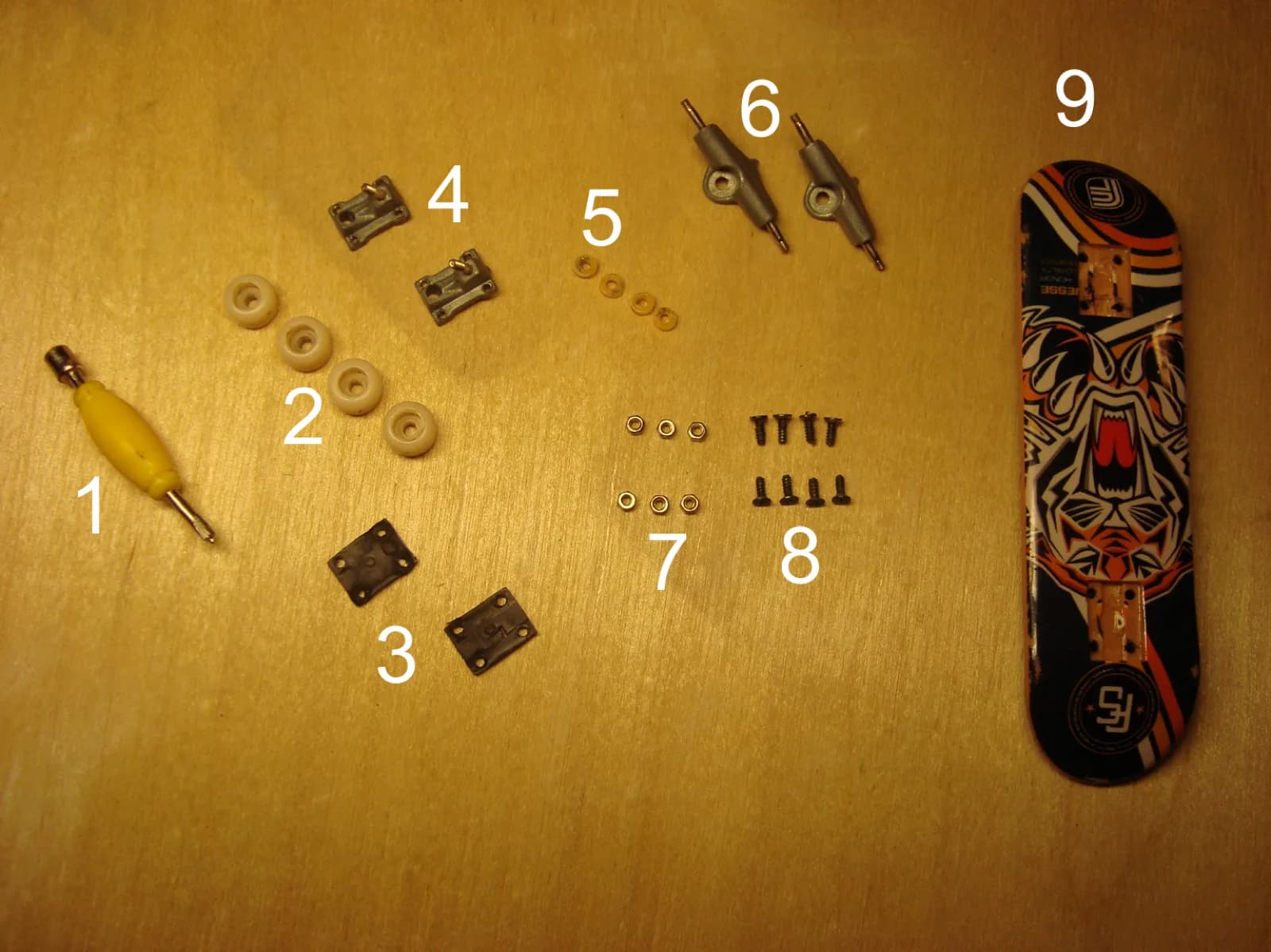
Hardware refers to the mounting screws, lock nuts, kingpin, kingpin nut, and washers that hold a fingerboard setup together. Kingpin tightness directly affects how firmly the bushings are compressed, which changes how the truck turns. Looser kingpin settings allow more responsive truck movement; tighter settings increase stability. Community and retailer guides consistently document that the kingpin nut should only show one or two threads beyond the nut when properly tightened, and that overtightening can strip the kingpin or crack bushings. Mounting screws attach the baseplate to the deck; screw length must match hole depth. Teak Tuning documents 5mm standard screws and 6mm extra-long screws as compatible with Teak, Blackriver, Y-Trucks, and Dynamic trucks. O-rings are documented by SavageShredz as an additional tuning element that sits on the kingpin above the hanger to fine-tune compression without changing bushings. Washers affect how bushing pressure is distributed across the bushing face.4, 14, 15, 16
- Kingpin nut tightness compresses bushings and changes truck response; adjust in small increments.
- Overtightening the kingpin nut can damage the kingpin thread or crack bushings.
- One to two exposed threads past the kingpin nut is the commonly documented target.
- Teak Tuning documents 5mm standard mounting screws and 6mm extra-long screws for risers or thicker decks.
- O-rings on the kingpin provide an additional compression layer between bushing and hanger.
- Washers distribute bushing pressure; their material and size affect rebound.
- Mounting screws must match hole depth; screws that are too long can split the deck or leave exposed points.
For buyers
For sellers
Still being verified
- Blackriver warns against overtightening hardware but does not publish a recommended thread-exposure target for the kingpin.
- No credible brand or reputable publication documents an aluminum-vs-steel hardware difference in fingerboard flex or response.
Tuning sequence: where to start
When dialing in a fingerboard setup, the recommended approach documented in community guides is to address parts in order of impact and reversibility. Starting with pivot cups is low-cost and can fix sloppy response without changing anything else. Moving to bushings changes the fundamental response curve and should follow pivot cup inspection. Kingpin tightness is an adjustment that can be iterated without any part changes; adjusting it while bushings are in place is the fastest way to identify a preferred range. Tape is typically the last change because it does not affect truck response but does affect grip and feel on flip and catch. Hardware (screws and washers) is addressed only when something is worn, missing, or causing a specific problem.4, 14, 16, 3
- Step 1: Check and replace pivot cups if worn — low cost, high impact on slop and return.
- Step 2: Adjust kingpin tightness to find a comfortable response range with existing bushings.
- Step 3: If response still does not feel right, try different bushing hardness.
- Step 4: Add or change washers and O-rings to fine-tune compression without swapping bushings.
- Step 5: Replace or upgrade grip tape last, once truck feel is established.
- Step 6: Address mounting hardware only when a problem (missing screw, stripped kingpin) requires it.
For buyers
For sellers
Speccing tuning parts in marketplace listings
Tuning parts appear in Kingpin listings as standalone items (bushings sold separately, pivot cups as spares, grip tape packs) or as part of complete or truck listings. Buyers searching for tuning parts typically look for brand, hardness, and compatibility. Sellers who include these details in titles and descriptions make their listings easier to find and evaluate. Vague descriptions like 'tuning kit' without naming the bushing brand, hardness, or pivot cup brand reduce buyer confidence. Marketplace listings for tuning parts benefit from close-up photos that show condition (flat spots on bushings, wear on pivot cups, cleanliness of unused tape).3, 5, 10, 2
- Include bushing brand and durometer (e.g., 'Teak Tuning 61A bubble bushings') in the listing title or first line of description.
- For pivot cups, state brand and any documented hardness or truck compatibility.
- For grip tape, state type (foam or grit), thickness if known, and whether pre-cut or full sheet.
- For tuning hardware (O-rings, washers, screws), state quantity and compatibility where documented.
- Photograph all tuning parts laid out flat for easy condition assessment.
- Avoid vague 'various tuning parts' listings without itemizing what is included.
For buyers
For sellers
On the Kingpin marketplace
References
Numbered references to the brand, retailer, and community pages that back this article. The label notes how firmly each source is established.
Teak Tuning 51A documented as 'extra loose' with maximum truck movement and range.
Teak Tuning 61A documented as 'loose'; identical feel to OG bubble bushings with more consistent shape.
FlatFace tuning catalog; documents Blistered bushings, Mike Schneider Pro Bushings, Basic Pivot Cups, V2 Pivot Cups for Blistered trucks, washers, and tool.
Community guide documenting baseplate, O-rings, pivot cup, and kingpin role; recommends starting with small adjustments and testing often.
Blackriver official pivot cup listing; documents five hardness variants color-coded: hard red, medium black, classic white, classic orange, soft blue, super soft white.
Blackriver combined bushing and pivot cup spare parts listing; confirms hard red color coding and German manufacture.
FlatFace sells Basic Pivot Cups in packs of 2 with random color; describes pivot cups as small plastic pieces used by nearly all professional fingerboarders.
Piro pivot cups listed as ultra-resistant, high-rebound urethane; compatible with Blackriver trucks.
SouthSoft pivot cups listed as professional urethane, compatible with Dynamic and Blackriver trucks.
Teak Tuning foam tape catalog documenting 0.5mm ultra-thin and 1mm standard options, pre-cut and full-sheet formats.
Teak Tuning official blog post describing foam vs. grit tape, documenting foam as the most common type, and covering thickness options.
Retailer guide covering foam vs. grit types, grit levels for sandpaper tape, and comfort considerations.
Community tutorial on foam tape application process for fingerboards.
Community/retailer guide covering kingpin tightness, bushing selection, and general truck feel tuning sequence.
Teak Tuning installation guide covering screw tightening, avoiding overtightening, and adjusting trucks slightly.
Community guide on loose vs. tight truck feel, kingpin nut adjustment, bushing selection, and O-ring use.
Keep reading
Recommended
Wheels Explained: Choosing Fingerboard Wheels
Wheels
Used Fingerboard Listings: What Photos and Specs Should Show
Buying smart
Beginner Completes: What Makes a Good First Fingerboard Setup
Setup basics
Deck Widths Explained: How to Choose and Compare Fingerboard Sizes
Decks
Trucks and Deck Compatibility: A Buyer-Friendly Guide
Trucks
Recent posts
Beginner Completes: What Makes a Good First Fingerboard Setup
Setup basics
Deck Widths Explained: How to Choose and Compare Fingerboard Sizes
Decks
Trucks and Deck Compatibility: A Buyer-Friendly Guide
Trucks
Wheels Explained: Choosing Fingerboard Wheels
Wheels
Rare Drops and Limited Graphics: How to Read Limited Releases
Buying smart
Used Fingerboard Listings: What Photos and Specs Should Show
Buying smart